UM Bandung’s Textile and Fashion Engineering Study Program Focuses on Developing Sustainability-Based Textile Innovations
Program Studi Kriya Tekstil dan Fashion (KTF) Universitas Muhammadiyah Bandung terus memperkuat posisinya sebagai program studi yang mengedepankan kreativitas, budaya, dan inovasi tekstil berbasis keberlanjutan.
Kaprodi Kriya Tekstil dan Fashion UM Bandung Saftiyaningsih Ken Atik menegaskan bahwa prodi ini dirancang untuk melahirkan lulusan yang tidak hanya terampil secara teknis, tetapi memiliki visi keilmuan dan karakter kuat.
Menurut Ken Atik, keunggulan utama Prodi Kriya Tekstil dan Fashion terletak pada pendekatan keilmuan yang berpusat pada medium tekstil.
“Kami tidak berhenti pada desain visual atau sekadar gaya, tetapi menempatkan tekstil sebagai medium utama dalam proses berpikir, berkarya, dan berinovasi,” ujarnya di Kampus UM Bandung pada Selasa (24/02/2026).
Dia menjelaskan, pembelajaran di prodi ini difokuskan pada tiga ranah utama, yakni structure design, surface design, serta integrasi dan implementasi tekstil.
Pada ranah structure design, mahasiswa dibekali pemahaman mendalam tentang struktur material tekstil.
“Mahasiswa tidak hanya merancang bentuk, tetapi memahami bagaimana struktur tekstil diciptakan melalui tenun, anyam, rajut, crochet, hingga manipulasi tekstil,” jelas Ken Atik.
Sementara itu, pada ranah surface design, mahasiswa diarahkan untuk menggali kekayaan budaya lokal sebagai sumber inspirasi.
Ken Atik menegaskan bahwa wastra Nusantara menjadi fondasi penting dalam proses kreatif.
“Budaya lokal kami jadikan basis inovasi, sehingga karya yang lahir tidak kehilangan identitas dan nilai artistiknya,” tuturnya.
Lebih lanjut, dia menyampaikan bahwa integrasi dan implementasi tekstil menjadi ciri khas yang membedakan lulusan Prodi Kriya Tekstil dan Fashion UM Bandung.
“Kami ingin lulusan menjadi textile creator dan innovator. Bukan hanya desainer busana, tetapi kriyawan tekstil yang mampu menghadirkan solusi desain di berbagai bidang,” ungkapnya.
Dari sisi pembelajaran, Ken Atik menekankan bahwa kurikulum disusun berbasis Project-Based Learning.
Proses belajar dilakukan melalui studio praktik, eksplorasi teknik dan material, serta proyek desain yang berangkat dari persoalan nyata.
“Mahasiswa kami latih untuk merespons isu keberlanjutan, limbah tekstil, hingga pengembangan teknik tradisional menjadi produk modern,” katanya.
Prodi ini juga secara aktif mengintegrasikan teknologi dalam proses pembelajaran. Mahasiswa dikenalkan pada desain tekstil digital, desain fashion berbasis teknologi, hingga konsep hybrid craft.
“Kami menjembatani warisan kriya dengan teknologi masa depan, agar mahasiswa adaptif terhadap perkembangan industri,” jelas Ken Atik.
Selain itu, koneksi dengan dunia industri menjadi perhatian serius Prodi Kriya Tekstil dan Fashion UM Bandung.
Melalui program magang, kerja profesi, dan kolaborasi dengan UMKM, mahasiswa diarahkan untuk menghasilkan produk yang siap masuk pasar.
“Kami ingin mahasiswa tidak hanya kuat secara konsep, tetapi juga siap secara profesional,” tambahnya.
Dengan pendekatan tersebut, Ken Atik optimistis lulusan Prodi Kriya Tekstil dan Fashion UM Bandung memiliki prospek karier yang luas.
“Lulusan kami diproyeksikan menjadi kriyawan tekstil profesional, perancang fashion, wirausahawan, hingga peneliti pemula yang berkarakter, beretika, dan berkelanjutan,” pungkasnya.
More News
UM Bandung’s Textile and Fashion Craft Study Program Hosts "Jejak Rasa" Exhibition
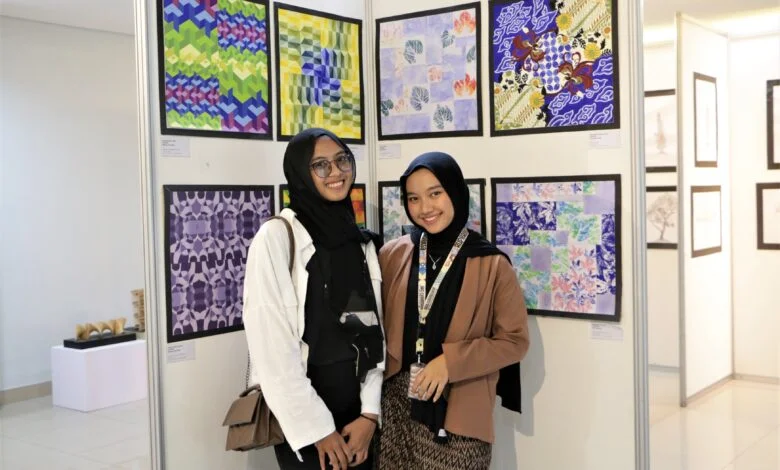
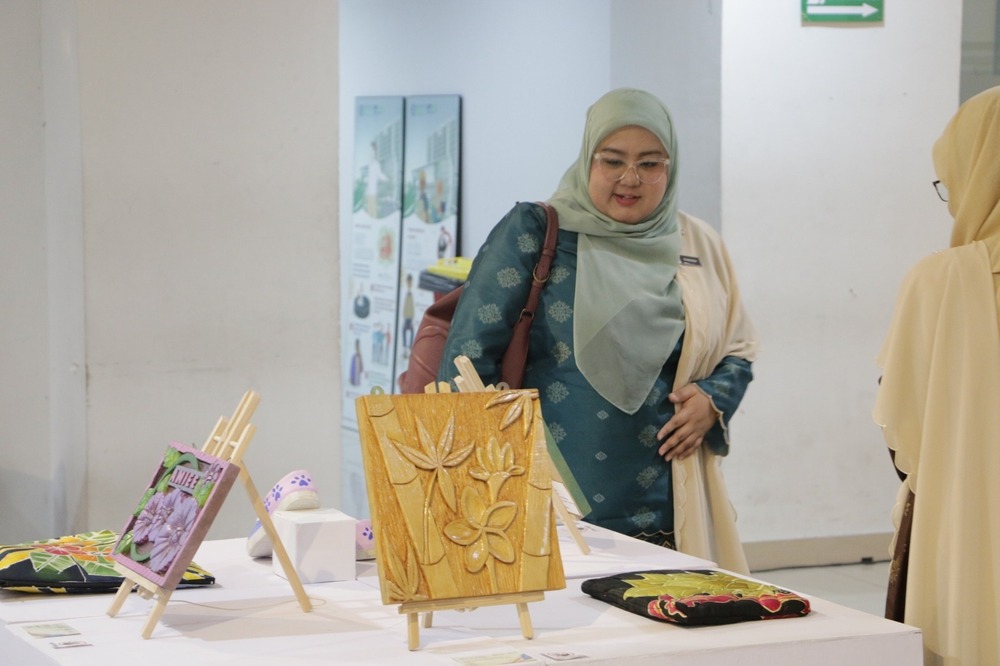
The Textile and Fashion Craft Study Program at Universitas Muhammadiyah (UM) Bandung successfully hosted an International Art and Craft Exhibition titled "Jejak Rasa: Collaboration Art and Craft to Empower Global Identity." Find out more The exhibition opened on Friday (May 2) at the KH Ahmad Dahlan Auditorium—located on the third floor of the UM Bandung building at Jalan Soekarno-Hatta No. 752, Bandung—coinciding with National Education Day. The event showcased artworks from the UM Bandung Textile and Fashion Craft program alongside contributions from several other Indonesian universities. The opening ceremony was attended by UM Bandung Rector Herry Suhardiyanto, Dean of the Faculty of Social Sciences and Humanities Irianti Usman, and a group of vocational high school (SMK) teachers from Malaysia. Saftiyaningsih Ken Atik, Head of the UM Bandung Textile and Fashion Craft Study Program, explained that the exhibition concept originated from visits by international guests and evolved into a platform for creative collaboration. "This exhibition represents a cross-border collaboration that brings together not only artworks but also cultural values and identities. We want to emphasize that Indonesia possesses cultural richness capable of making its mark on the global stage," she said. She hopes the event will inspire concrete action from the university to preserve noble cultural values."As part of an Islamic Technopreneur University, we want these craft pieces to possess not only aesthetic value but also convey a message about who we are—a nation with deep cultural roots in an increasingly borderless world," explained Ken. The exhibition attracted the attention of teachers from eight vocational high schools (SMK) in Malaysia. They showed great enthusiasm for learning about craft arts and design. "Although they come from vocational schools, their passion for learning new things in the fields of craft and design is truly remarkable," Ken added. Meanwhile, Salbiah Binti Sanusi, Head of the Visual Arts Education Teacher Delegation from the Sepang District, Malaysia, expressed her appreciation for the warm welcome and the organization of the exhibition at UM Bandung. "Praise be to God, the reception has been even better than during our previous visit. This 'Jejak Rasa' program has been a wonderful surprise for our group," said Salbiah. Salbiah also described the state of visual arts education in Malaysian schools. "For Forms 1 through 3, visual arts education is a compulsory subject. However, in Forms 4 and 5, it becomes an elective. Many students choose art without a genuine interest in it, so we have to work hard to help them appreciate the subject," she explained. She added that in Malaysia, visual arts are taught at a foundational level—covering both theory and practice, such as drawing and crowd art. "We only teach the basics; the hope is that they will achieve basic proficiency." Salbiah views this exhibition as an opportunity for collaboration between Malaysian schools and UM Bandung. "Hopefully, this isn't our last meeting, but rather a starting point. We have two religious-based schools where the students excel academically. Perhaps we can collaborate further down the line." A variety of colorful artworks were displayed at UM Bandung’s Selasar Gagas. These pieces successfully captivated visitors, including both university students and the general public. Many took the opportunity to capture the moment with selfies at the exhibition venue, which also served as an aesthetic photo spot. The exhibition opening also featured a fashion show accompanied by traditional *Rumpakasahita* music. Additionally, students from the Textile Craft and Fashion program performed the *Sampurasun* dance as a welcoming gesture. Delegates from Malaysia were invited to visit the Textile Craft and Fashion laboratory, where they viewed various artworks on display. This lively event took place from Friday to Tuesday (May 2–6). Artworks by lecturers and students from various other institutions were also exhibited during the event. These participants hailed from the Indonesian Institute of Arts and Culture (Bandung), the Indonesian Institute of the Arts (Denpasar, Padang Panjang, and Surakarta), the National Institute of Technology, the Jakarta Institute of Arts, the Indonesian College of Design, the Indonesia University of Education, Sebelas Maret University, and the Digital Technology University, as well as Paivi Punamaki from Scandinavia. The Malaysian teachers came from SAM Bandar Baru Salak Tinggi, SMK Bandar Baru Salak Tinggi, SMK Cyberjaya, SMK Dato Abu Bakar Baginda, SMK Pantai Sepang Putra, SMK Putra Perdana, SMK Sri Sepang, SMK Sungai Pelek, and SMK Sungai Rawang.
Crossing Creative Boundaries: 50 Artists from 8 Countries Showcase Craft Works at the ARMA Museum, Bali
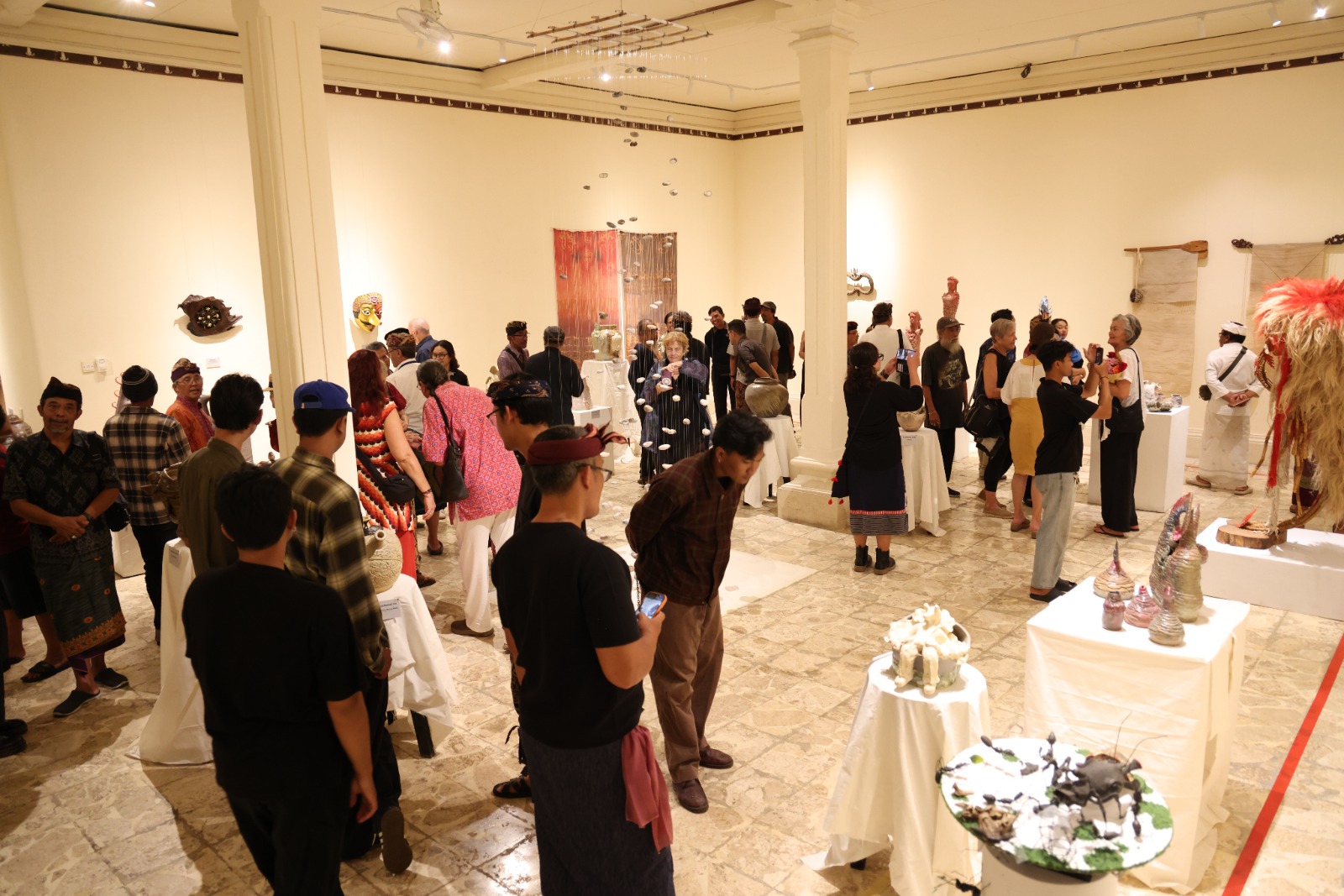
The art exhibition titled "Prakriti – Pustaka – Padma 2026," held at the ARMA Museum, presents a captivating array of artworks that create a diverse and dynamic atmosphere. The exhibition space comes alive with a brilliant blend of two- and three-dimensional pieces. The displayed works offer more than just visual beauty; they invite visitors to experience the contrasting nuances between the grandeur of sculptures and ceramics, the delicate patterns of batik, and the vibrant expressions captured on canvas. This exhibition—featuring craft artists from various Indonesian art universities alongside international professionals—was officially opened by the Rector of the Indonesian Institute of the Arts (ISI) Bali, Prof. Dr. Kun Adnyana, with the ceremonial striking of a gong on Sunday, July 5, 2026.The opening ceremony was attended by ARMA Museum founder Anak Agung Rai, alongside renowned curators such as Jean Couteau, Warih Wisatsana, and Seriyoga Parta. The exhibition is scheduled to run until July 18, 2026. The event drew a host of distinguished guests, including representatives from the Gianyar Culture Office; the Deans and staff of the Faculty of Visual Arts and Design (FSRD) and the Faculty of Performing Arts (FSP) at ISI Bali; cultural figures, artists, and Balinese art maestros; museum and gallery owners; ISI Bali professors; and participating artists from both Indonesia and abroad. “The *Kriya Prakriti – Pustaka – Padma* exhibition is part of the 30th-anniversary celebrations of the ARMA Museum, which falls on June 9, 2026. The ARMA Museum is fully committed to presenting a wide range of programs spanning not only visual arts but also performing arts at local, national, and international levels,” stated the Organizing Committee Chair, Prof. Dr. Drs. I Wayan Suardana, M.Sn., in his report. For this year's exhibition program, the ARMA Museum has partnered with the Craft Study Program at ISI Bali to serve as the primary organizer of this international event. Showcasing a diverse range of media and artistic approaches, the exhibition highlights how contemporary craft is rapidly evolving through cross-boundary creativity. It also serves as a space for contemporary aesthetic exploration, driven by cross-cultural interactions that enrich the possibilities of artistic creation. This international-scale exhibition features artists from eight countries: the United States (USA), the Netherlands, Germany, Switzerland, India, Kenya, Iran, and Indonesia. In addition to professional artists, the exhibition is supported by academics and craft lecturers from various Indonesian higher education institutions—such as ISI Yogyakarta, ISI Surakarta, ISBI Bandung, Unesa Surabaya, the Indonesian Informatics Institute (IKADO) Surabaya, Universitas Muhammadiyah Bandung, Universitas Negeri Gorontalo, and Universitas Bumigora (West Nusa Tenggara)—as well as visual artist groups from Surabaya.
Ken Atik’s Textile Art Brings UM Bandung to the Global Art Appreciation Stage
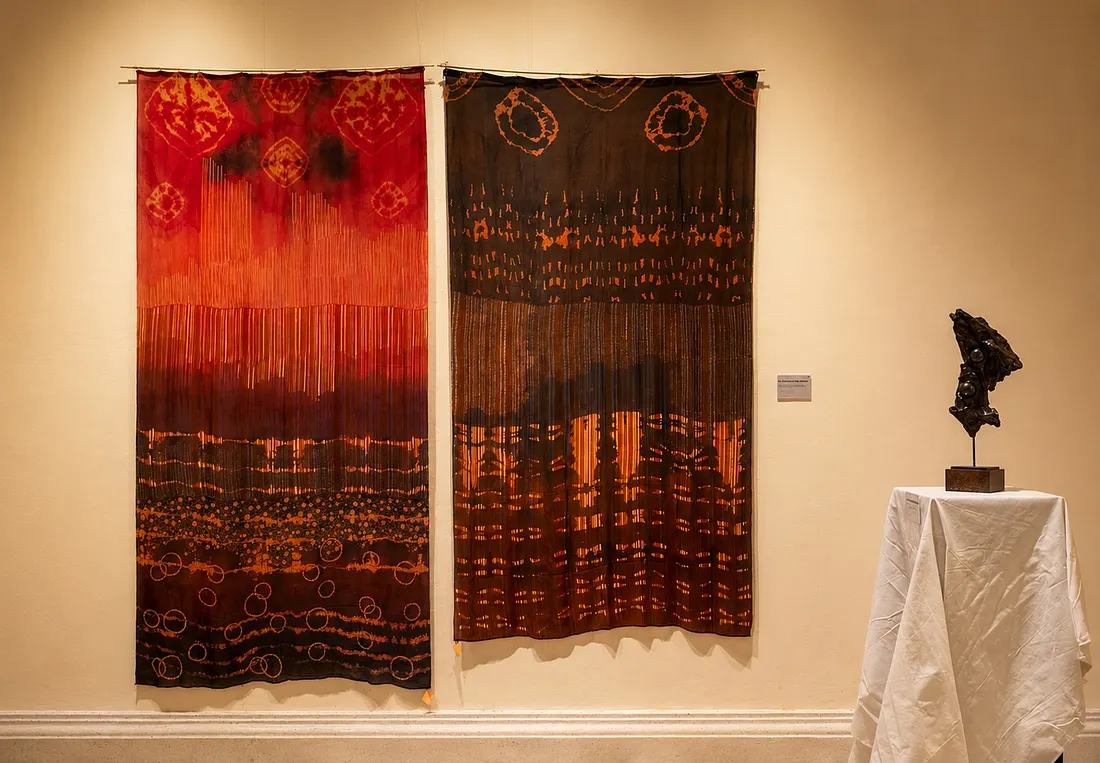
A textile artwork from the creative studio of Universitas Muhammadiyah (UM) Bandung has now become part of the global art conversation. Through the work of Ken Atik, Head of the Textile and Fashion Craft (KTF) Study Program at UM Bandung, Indonesian traditional textiles are being showcased at the *Prakriti–Pustaka–Padma 2026* Exhibition—an international art event held at the ARMA Museum (Anak Agung Rai Museum of Art) in Ubud, Bali. This achievement marks a significant milestone, demonstrating that the work of UM Bandung academics can successfully reach the global stage of art appreciation. Ken Atik’s participation was not the result of a direct invitation but rather the outcome of a rigorous curatorial process organized by the Indonesian Institute of the Arts (ISI) Denpasar. Through this selection process, she was chosen as one of the textile artists representing Indonesia alongside dozens of other artists from various countries. "I received an invitation from ISI Bali to participate in the *Prakriti* Exhibition following a curatorial process. Thankfully, my work was selected, allowing me to take part in this international exhibition as a textile artist," said Ken. For the event, Ken presented a textile piece measuring 110 x 225 centimeters that integrates various surface exploration techniques.Techniques such as batik, painting, art foiling, and tie-dye are combined on silk fabric using synthetic dyes, resulting in works that merge the rich textile traditions of the Indonesian archipelago with a contemporary fine art approach. Although the artist could not be present in Bali in person, the exhibited works represent the creative journey and academic identity that UM Bandung brings to the international stage. For Ken, each piece of fabric presented speaks of more than just aesthetics. It also reflects the processes of education, research, and community service cultivated within the campus environment. “This is a source of pride for UM Bandung, particularly the Textile and Fashion Craft Study Program. Our lecturers continue to be entrusted with participating in various international exhibitions. Hopefully, this serves as motivation for students to keep creating and to build professional character as artists or designers,” he said.According to him, the participation of lecturers in international art forums is part of the implementation of the *Tri Dharma Perguruan Tinggi* (the Three Pillars of Higher Education). The experience of exhibiting, engaging in dialogue, and networking with artists from around the world will enrich the classroom learning process while broadening students' horizons regarding global developments in art and design. The *Prakriti–Pustaka–Padma* 2026 exhibition was initiated by ISI Denpasar, with I Wayan Suardana serving as the organizing committee chair. It centers on three key concepts: *Prakriti* is interpreted as nature—the source of creative inspiration—while *Pustaka* represents knowledge passed down across generations.Meanwhile, the *Padma*—or lotus flower—symbolizes the growth of creativity through an ever-evolving artistic process. The event, inaugurated by ISI Bali Rector Kun Adnyana on July 5, 2026, serves as part of the ARMA Museum’s 30th-anniversary celebrations. The opening was attended by ARMA Museum founder Anak Agung Rai alongside curators Jean Couteau, Warih Wisatsana, and Seriyoga Parta, underscoring the exhibition's status as a significant venue for art appreciation in Asia. Fifty artists from eight countries—the United States, the Netherlands, Germany, Switzerland, India, Kenya, Iran, and Indonesia—are showcasing diverse works spanning sculpture, ceramics, batik, traditional fabrics, textiles, and contemporary art. The convergence of these various mediums and cultural backgrounds transforms the exhibition into a space for cross-national dialogue, demonstrating how art can bridge differences through a universal visual language. Ken Atik’s participation further highlights that UM Bandung produces not only academics active in teaching and research... ...but also artists capable of presenting creative ideas on the international stage. From the campus studio to global art galleries, the textile works presented serve as proof that Indonesian academic creativity continues to secure its place within the global art conversation. The *Prakriti–Pustaka–Padma* 2026 exhibition runs until July 18, 2026.